It has been years since my last post, years since writing a reflective piece about...anything. I have been caught up in the daily minutia that we all get sucked into. Why did I stop? There are too many reasons why and going back and looking at the dates it all became very clear. I became an elementary assistant principal about eight months after my last post. So much has happened that could fill volumes (If those still exist) since writing three years ago.
One thing I know for sure is that the information from my last post still resonates with me. It did as a teacher and it does as an administrator. It is all about the kids. It is all about the kids. We need to work together as a TEAM. Bo Schembechler said it best "THE TEAM, THE TEAM, THE TEAM!"
We need to do WHATEVER IT TAKES to meet the needs of our students.
We need to take care of each other.
We need to help one another.
Another school year is upon us and being a reflective practitioner should involve some reflection. I am promising myself to be more reflective; to write about experiences. This has always helped to make things more clear.
Monday, August 3, 2015
Friday, October 19, 2012
One Year Later...What Have I Learned?
It has been a long time since I have taken the time to write. I have been writing alright, just in a different format. I have been writing college papers to earn my certification to be an administrator.
Today was the day I sent all of the paperwork in and feel a genuine sense of relief that the year of not seeing my kids, wife, and friends is over.
What have I learned through all of this new schooling to be a "leader" of a school?
I have learned that you need to listen more than you talk.
You need to take the time to get to know the people you work with as people, "human beans" as the BFG from Roald Dahl's classic children's book would say.
You need to focus. Not only on the big picture but on all of the individual details.
You can't be afraid to make mistakes. "If it weren't for mistakes how would we ever learn." That's my motto.
You need to be honest with yourself and others around you.
Admit what you don't know and then learn what you don't know.
You need to stop throwing all of those educational acronyms and initiatives around and get to the heart of the matter. What will help kids learn the best way possible.
To go along with this, use plain language the third grader can understand.
You need to empower others. All people need to feel valued. Equally.
You can't play favorites. This I learned form Bo Schembechler, the former Michigan head coach. He was a born leader. I recommend his book to anyone.
One kind comment can make someone's day, week, month... Try to do this often.
Complaining only gets you so far...So far, I don't know where that is. Don't complain. (We are all guilty of this sometime :)
I love working with peers to get better at teaching. I love observing them and having them observe me... then...talking about student learning and understanding.
Be more creative in the classroom everyday. I learned so much of this from my teachers at Sacred Heart University and from my Cohort 24 crew. I miss seeing them and talking about the important stuff very much.
Laugh a lot. Then laugh again.
You need to keep meetings short. You need to not meet at all when there is no need to meet.
Walking the beat often is probably the best thing you can do. Your colleagues appreciate this.
Hanging in the cafeteria and on the playground will allow students to see you as a human bean. You will see them just as they are, kids who need time to play, have fun, and feel safe in a positive environment.
Working with small groups of kids for short periods of time is very powerful.
People want to be led. They want to learn. They love what they do.
Parents want to help.
Be proactive.
I'm sure I missed a whole bunch. I hope to add more real soon.
It's time to play!
Today was the day I sent all of the paperwork in and feel a genuine sense of relief that the year of not seeing my kids, wife, and friends is over.
What have I learned through all of this new schooling to be a "leader" of a school?
I have learned that you need to listen more than you talk.
You need to take the time to get to know the people you work with as people, "human beans" as the BFG from Roald Dahl's classic children's book would say.
You need to focus. Not only on the big picture but on all of the individual details.
You can't be afraid to make mistakes. "If it weren't for mistakes how would we ever learn." That's my motto.
You need to be honest with yourself and others around you.
Admit what you don't know and then learn what you don't know.
You need to stop throwing all of those educational acronyms and initiatives around and get to the heart of the matter. What will help kids learn the best way possible.
To go along with this, use plain language the third grader can understand.
You need to empower others. All people need to feel valued. Equally.
You can't play favorites. This I learned form Bo Schembechler, the former Michigan head coach. He was a born leader. I recommend his book to anyone.
One kind comment can make someone's day, week, month... Try to do this often.
Complaining only gets you so far...So far, I don't know where that is. Don't complain. (We are all guilty of this sometime :)
I love working with peers to get better at teaching. I love observing them and having them observe me... then...talking about student learning and understanding.
Be more creative in the classroom everyday. I learned so much of this from my teachers at Sacred Heart University and from my Cohort 24 crew. I miss seeing them and talking about the important stuff very much.
Laugh a lot. Then laugh again.
You need to keep meetings short. You need to not meet at all when there is no need to meet.
Walking the beat often is probably the best thing you can do. Your colleagues appreciate this.
Hanging in the cafeteria and on the playground will allow students to see you as a human bean. You will see them just as they are, kids who need time to play, have fun, and feel safe in a positive environment.
Working with small groups of kids for short periods of time is very powerful.
People want to be led. They want to learn. They love what they do.
Parents want to help.
Be proactive.
I'm sure I missed a whole bunch. I hope to add more real soon.
It's time to play!
Friday, December 2, 2011
The Inconsistent Blogger is Back...With Random Thoughts
My thought was to rename this blog "The Inconsistent Blogger". New ideas always pop into my head but finding the time to post is nearly impossible. Today I will post some random thoughts and hopefully develop some of these ideas soon.
I still need to tell you about inquiry science. The students learn more in a rigorous, thought provoking way than in any other way I have ever seen. Here is a link to the Exploratorium Institute for Inquiry. They can explain it very well.
Inquiry can be done successfully in math, science, reading, social studies, writing, and probable any discipline. It begins with having questions or a desire to learn something new. Just think about how many questions come to mind every day about the world around you.
Right now I am so disappointed with the state of science in Connecticut and in the U.S.
Science is treated as a closest, not a discipline.
You can teach reading, writing, math, social studies, social skills, technology, and engineering through science. Can you do the same through the others?
Bobby Valentine will be a good fit for the Red Sox. Everyday will sure be fun!
I am quite impressed with the professors at Sacred Heart University's Farrington School of Education. They really make you learn in a rigorous, thought provoking, engaging way.
After last year's debacle, I officially passed on raising the trout this year. (See last year)
Giving specific effective feedback really helps to improve student learning.
Atul Gawande deserves the Time Man of the Year Award. Just read his stuff. He is far ahead of his time.
Making students go back to their work really helps to improve student learning.
I have heard more lightbulbs go off then any other year of my teaching career.
Cognitive Coaching training helps people become better teachers.
Get sleep. Eat right. Laugh a lot. This will make everyday better.
You learn something new about people you already know all of the time.
Have fun.
Saturday, August 20, 2011
Another Week of Science Inquiry... Want to Know?
You must be on the edge of your seat waiting to find out all of the fascinating details of the week. You will not be able to move on until you know what this group of teachers from Danbury, New Milford, and Newtown accomplished over the past week.
Their work was so regarded that they were visited by Senator Richard Blumenthal.
Their work was so exciting they landed on the front page of the Danbury News Times on August 16th.
What did this group of teachers do over the past week?
Want to know?
Well to understand you need to go back about a year ago. Back to last August when they first met for a similar week long experience.
But that won't help because you need to go a bit further back to when the seeds of thought for this group began to be formulated.
Are you more confused? Do you have more questions? Do you want answers to those questions?
That is what inquiry is all about.
I will tell you.
Just not right now.
Feel free to ask. I will let you know soon enough. You just may be able to find out for yourself.
Tuesday, August 9, 2011
It is Sunday
A long way back Philly broke the summer up into parts, like one long weekend. The part left in June was like a Friday night. A little chunk, a break away from the daily grind. July is Saturday. A whole month to enjoy all that summer brings. August...Sunday, with all of the anticipation that leads to the work week ahead or in an educator's case a school year ahead.
We are now fully into Sunday. The thoughts of the new year begin to creep into our minds with all that a new year brings. A routine is good. The excitement of what will be is good too.
Can we hold onto Sunday just a little bit longer though?
Wednesday, July 13, 2011
The CMT Results are in and...They did great, again!
Just a quick blog to report the great scores again for the students at my school. The students and teachers deserve a bit of recognition for their continued improvement every year. All of the teachers from kindergarten through whatever grade have helped the students to learn and make the growth year after year. It is only one test, but it is the only comparative test we have until there is a national curriculum and national test.
Let
Percent of students at or above goal:
Grade 5
Math 94.2
Reading 85.4
Writing 91.5
Grade 6
Math 94.9
Reading 95.6
Writing 88.7
These scores have basically gone up every year and are far above the state averages. I won't bore you with all of the information. It is unfortunate that the press messes it all up and finds only bad things to say for the most part.
We should be proud of our students.
(I apologize for only focusing on two grades.)
Wednesday, July 6, 2011
Moby-Duck, A Great Summer Read
Anyone interested in inquiry, science, adventure, toys, teaching, the environment, high seas, mysteries, and basically anything else will need to pick up this book for a great summer read.
I just picked up the book Moby-Duck, by Donovan Hohn from my local library. I was intrigued by the story since Eric Carle's Ten Little Rubber Ducks is based on the same topic.
A container ship south of the Aleutians loses two containers in a vicious storm on January 10, 1992.
One paragraph from the prologue sucked me in and I know I won't be able to put this book down.
"Follow one line of inquiry and it will lead you to another, and another. Spot a yellow duck dropped atop the seaweed at the tide line, ask yourself where it came from, and the next thing you know you're way out at sea, no land in sight, dog-paddling around in mysteries four miles deep. You're wondering when and why yellow ducks became icons of childhood. You want to know what it's like inside the toy factories of Guangdong. You're marveling at the scale of humanity's impact on this terraqueous globe and at the oceanic magnitude of your own ignorance. You're giving the plight of the Laysan albatross many moments of thought."
If this isn't pure real life inquiry, I'm not sure what is. It sure is a great example for teachers of inquiry science.
Happy Reading.
Here is a link to an NPR story on the topic
Tuesday, July 5, 2011
Oh That State Budget
The Connecticut budget situation has now begun to severely affect the lives of many children across the state. Funding for most inter-destrict grants has been eliminated at this point due to the ongoing budget negotiations. This means that many students who have an opportunity to attend a camp that provides the experience of hiking, beach activities, a trip to Mystic or the Bronx Zoo, a visit to Talcott Mountain Science Center, along with many other fun and educational activities will not be able have camp. This adds up to 600 students just for the organization ctscience4kids.org that I work for.
Many of the students that attend these camps are unable to pay for camp. These camps are virtually free for all who attend. Now these kids will not have camp. What a disgrace.
Please call Governor Malloy's office to express your concern that students attending inter-district camps will be unable to have a once in a lifetime experience that many of the children could not otherwise afford. It is not too late for them to hear the message.
The phone number is 860-566-4840.
Thank you.
Sunday, July 3, 2011
A Workshop Week and Then Some!
My fellow DESICA science cohorts and I have spent the last week in professional development, with two more days to go this week and five more days to go in August.
Why in the world do we do this to ourselves?
We drag out of bed in the summer pre-dawn hours to trek across the state to Hartford or Danbury. Is this what we had in mind when we first became teachers? No. Summers off with days on the beach, watching the sunset in the evening by some dock of the bay wasting time was more of what was going through my mind. I think we ask "why" basically everyday. None of us seem to answer the question because we all know and understand without saying.
Most of the presentations and activities are excellent, some are not. That is true for any type of professional development though. Overall we have learned a great deal about teaching and learning and have made incremental and in some cases vast changes in the way we instruct on a daily basis. This goes not just for science, but math, reading, writing, and social studies as well. We have developed connections and resources that make our jobs so much easier. We have support from colleagues and peers from other towns in Connecticut. We are more confident in our daily instruction.
So back to the original question. Why do we do this to ourselves in the summer when we don't have to be attending professional development?
Beneath the chatter of being tired, mileage on our cars, missing our families, or plain old goofing around we all have a deep unspoken understanding that we are there to help improve the science instruction in our schools. If we can begin to improve our instruction in our classroom, then begin to help others in our school, we will systemically be able to improve science instruction and learning for all of the children in our schools. If this can be done in science, it can be done in all the other subjects. Slowly but surely I think we can get there. It is all for the kids!
This is why we go. Even though it would be nice to sleep past 6:00 am some day.
Happy Independence Day.
Saturday, June 25, 2011
A Year End Reflection...The Good, The Bad, and The Trout
Another school year has come to an end. A pattern is beginning to come forth. First a flurry of blog posts in September and October, excited at the beginning of a new year. Then November, with conferences and turkey, a slow down. Here and there posts resume in December and January. Then my brain issues a cease and desist blogging order once CMT season comes upon us. I feel too worn down at that point to spend any excess energy on Saturday night reflecting.
I wish I could keep it up and post at least once each week. Maybe next year. Maybe this summer. Who knows?
There is a need to tie up loose ends though in 11 steps.
1. This year of trying to do inquiry science has been an overwhelming success. Using new techniques to teach science, and math and reading too, has been fantastic. I feel more able to let go and let the inquiry process lead students to new discoveries, learnings, and understandings. They learned more than they ever have in the past.
2. Pets and I have never had the best relationship. The trout are a fine example of my poor pet parenting. The trout eggs caught a fungus that I didn't notice until it was far too late. We saved three trout that did hatch. We got a new delivery of trout from another school that had too many. The tank had issues. Well, it was the tank owner that had issues. I didn't take care of the tank very well. The students reminded me of this each day as the water turned greener and murkier. I just figured that's what happens. We'll let the tank do what it does. This was quite the bad mistake. One morning I came in and the fish were gasping. I have never done emergency CPR on a fish, but decided to just bring the ones who were not floating upside down to Mr. Stentiford's room. He is the Mariano Rivera (the closer or the guy who gets the save) of the trout world. Most made it. Some didn't. I got rid of the water and soon after, the tank. No more pets for me. Well the rocks on the window sill have made it a few years.
3. Graduate science education classes at WCSU were hard, really hard, and really confusing. That's all I have to say about that.
4. We had a great class this year. The students learned a lot and sure taught me a great deal each day. I know I learned more from them than they did from me. I also have the greatest teaching partner in the world. Thanks for everything Gael!
5. It is easy to get caught up in the daily hoopla in a school. I think I have learned to just stay in the moment in the classroom and deal with the important part of school, data collection and RTI forms. No, just kidding...teaching and learning.
6. I definitely have the greatest colleagues at my school and in my DESICA cohort. I learn from all of them all of the time. They are all so creative and share wonderful ideas. They are pretty funny too. Good old sophomoric humor can sure get you through a crazy day or a three hour lecture or both. Thanks Todd and Peter, (and Gary too).
7. It is important to remember when dealing with people (and we deal with hundreds each day) to remember that each person has their own unique qualities and has wonderful things to offer.
8. Teaching, although not the most lucrative business in the world, rewards the soul. All it takes is the one student who evaded you all year to have tears coming down their face on the last day of school.
9. It is easy to think back to the lessons that didn't go well, the learning objectives that flopped, and the bad days you had. But as Lee Iacocca so bluntly said:
"So what do we do? Anything. Something. So long as we just don't sit there. If we screw it up, start over. Try something else. If we wait until we've satisfied all the uncertainties, it may be too late."
"We keep moving forward, opening new doors, and doing new things,
because we're curious and curiosity keeps leading us down new paths."
This is what keeps us going each day!
11. I'm curious to see what next school year will bring. I am more curious to see what wonderful adventures lie ahead this summer.
As the kids in grade six say: "H.A.G.S!" (This means have a great summer for those of you too old to understand Bieber Fever.)
Labels:
CMT's,
Education,
inquiry science,
Justin Bieber,
Summer
Sunday, March 6, 2011
Demitasse: The Most Delicious Coffee and Snacks Just Waiting for You in Sandy Hook Center
(This is a repost of part of a blog entry from August)
My New Favorite
A small coffee shop with good coffee and atmosphere closed last summer in Sandy Hook, Connecticut (a section of Newtown) called Mocha. This quaint shop overlooks a rambling river called the Pootatuck. A new place Demitasse took its place, so I thought I would give it a try. Holy cow, I downed this cup in minutes. After asking a few questions, I learned they serve Willoughby's roasted coffee out of Branford and New Haven. This is near my home. I happened to have an appointment right across the street from the Branford Willoughby's shop a few days later. Reasonably priced, flavorful, leaving you wanting for more. It is just a bit difficult to get to, not on my ride anywhere. I will go out of my way for this cup though.
I try to go there at least oncer per week. It is always the best cup of the week. The pastries, including blondies, pecan bars, and various cakes and snacks are a must.
Coffee. What else can be said. Other thoughts come to mind, but I will save that for another day. In the mean time, greet good morning, good afternoon, and good evening, with an unforgettable cup of Joe.
Please feel free to add your favorites to this list!
Saturday, March 5, 2011
The Trout Story Continued
I forgot to continue the saga of the Trout. I'm sure you have been on the edge of your seat. The suspense has been built to such an incomprehensible level that the blog page counts are going through the roof. I know you all want to know what has happened with those fickle fish delivered back in November.
Well we stared out with 199 eggs. We now have eight minuscule fish swimming freely in a tank fit for sharks.
What happened?
Fungus happened.
Within a couple of weeks of resting comfortably in the tank, the fish developed a quick spreading fungus. When I say quick, I mean one morning there was nothing, then in the afternoon the eggs were covered in a suffocating fungus that could not be removed. Only three of the eggs were spared.
Those three littles did make it. We received a donation from Mr. Roody of about twelve fish or so.
They were enjoying there time in the free waters of the tank. Then one morning, about seven went missing. We looked all over, checked the filter, the tubes, the chiller, even on the floor. Nothing.
This is still a mystery. Even some of Mr. Stentiford's disappeared. Some were in the filter, some unaccounted for.
Now we are trying our best to keep these eight healthy and ALIVE until they are ready to reach the open waters (tiny pond).
Wish us luck.
Next year we're raising worms instead.
This is what the fungus looked like.
Well we stared out with 199 eggs. We now have eight minuscule fish swimming freely in a tank fit for sharks.
What happened?
Fungus happened.
Within a couple of weeks of resting comfortably in the tank, the fish developed a quick spreading fungus. When I say quick, I mean one morning there was nothing, then in the afternoon the eggs were covered in a suffocating fungus that could not be removed. Only three of the eggs were spared.
Those three littles did make it. We received a donation from Mr. Roody of about twelve fish or so.
They were enjoying there time in the free waters of the tank. Then one morning, about seven went missing. We looked all over, checked the filter, the tubes, the chiller, even on the floor. Nothing.
This is still a mystery. Even some of Mr. Stentiford's disappeared. Some were in the filter, some unaccounted for.
Now we are trying our best to keep these eight healthy and ALIVE until they are ready to reach the open waters (tiny pond).
Wish us luck.
Next year we're raising worms instead.
![]() |
| http://www.ars.usda.gov/is/AR/archive/oct10/fish1010.htm |
Tuesday, February 1, 2011
A Tutor's Perspective
I am lucky to be able to work with students outside of school on a one to one basis. Unfortunately in the classroom you don't have the opportunity as often as you would like to do as much individualized instruction. It is quite interesting to learn about how and what other grade levels and other schools teach. The methods are all different. As a tutor, I need to adapt to those methods to help the student make sense of the information from which they will be assessed.
I can only feel like I am making a difference when my students are feeling confident and successful. Some days they are confident and surely there are days when their level of confidence and understanding makes it quite difficult to help further their understanding.
I think the greatest thing I have learned as a teacher is that each student is an individual and my teaching methods need to be different for each student in order for them to be successful. It has taken a long time for this realization to set in. How I approach each student needs to be slightly different in order to get the best out of them. Working individually with students has allowed me to develop new techniques and tricks to help students. Often I am able to take these "new leanings" and apply them in the classroom. I can see more clearly where students have difficulty on a certain topic.
One week not long ago I had probably my most gratifying week as a Tutor. Over the course of three days one student got an A on a re-test they previously failed. One student whom I have worked with for years passed his private school entrance exam with flying colors, and my little Kindergartner had mastered her sight words for Kindergarten and no longer needed her mom to sit with us while we worked.
Each of these students along with all of the others have taught me so much more than I could ever teach them. I am proud of them. I am proud of all of my students. I guess this is why I would not change my chosen career path. You never stop learning.
Now, lets get back to school!
Thursday, December 30, 2010
Less Talking (by me), More Learning (by them)
![]() |
| http://headrush.typepad.com/photos/uncategorized/schoolboy_1.jpg |
There are many things I learn each day. One of the many things that have dawned on me since jumping headfirst, no... feet first, no... sideways describes it best, into inquiry based science is that students learn more when I talk less. When they are given the opportunity to work collaboratively on a problem, project, or inquiry it is their discourse and thinking that leads to new learning. My facilitating helps, but not from a pulpit at the front of the room. This is a hard switch to make. In order to feel control and know what is going on in every corner of the room, I have always felt that need to be in the front. As this shift has begun to happen, being anywhere in the room has been fine because when the trust has been put in the students' hands. They have been on task and learning. Probably, no, definitely more than if I was lecturing in the front of the room.
As the students have had opportunities to talk more in smaller groups, they have had more opportunities to think, and thus more opportunities to learn. Two thousand ten was a great year of learning for me. I hope 2011 is a year of less talking (by me), and more learning for my students!
Happy 2011!
Tim
Sunday, December 12, 2010
Integrating Science and Reading...It isn't that hard.
This post is in response to an article written by George Stockwell in the Newtown Patch.
http://newtown.patch.com/articles/we-need-to-make-time-for-srbi
My response is to the fact that teachers are required to teach more reading and science is always the subject that takes a back seat.
You are preaching to the choir here! Integrating science and reading can be done at all grade levels. A bit of creativity, open-mindedness, and persistence can make it happen. When push comes to shove, those three things lose out and it is the same old instruction. It isn't that hard. Science is the easiest subject to integrate. Using an inquiry based approach, you use every single skill and more that you would be using in a reading or literacy lesson. You are using the same and at times much more in depth thinking skills. The writing connection is more genuine and connected because it is based on what the kids are actually doing. Unfortunately when science is missing, the kids are the ones that lose out. I think everyone loses out.
It just makes sense to integrate the two. The book called The Essentials of Science and Literacy focuses on this very idea.
Here is a testimonial:
Essentials of Science and Literacy provides classroom teachers with a wealth of classroom tested and research-based best practices designed to engage students. It addresses one of the major shortcomings in many classrooms, providing students with the time and opportunity to make sense and to communicate their understanding of the science investigation they are engaged in.
—Mike Klentschy
Author of Scaffolding Science Inquiry Through Lesson Design
Thanks again for keeping this at the forefront. I heard this type of discussion at our cohort meetings last year. This year I am hearing a much different tone, students are getting more science from the 30 teachers in our group. They are loving it and learning. They read every day too!
As Bill Nye always says..."Science Rules!"
Here is a link to a NSTA article that explains clearly how standards for these the two disciplines mirror one another.
Saturday, December 4, 2010
Today's Lunch
Can you identify today's lunch?
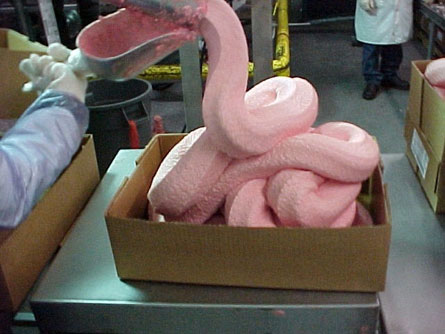
Blend of 3 Fruit Juices From Concentrate: Apple, Grape, and Cherry Juices From Concentrate , (Water , Apple, Cherry and Grape Juice Concentrates) , With added ingredients & other natural flavor: Apple, Grape, and Cherry Juices From Concentrate , (Water , Apple, Cherry and Grape Juice Concentrates) , Blend of 3 Fruit Juices From Concentrate: Citric Acid , With added ingredients & other natural flavor: Citric Acid , Blend of 3 Fruit Juices From Concentrate: Natural Flavor , With added ingredients & other natural flavor: Natural Flavor , Pizza Crusts: Wheat Flour , (Enriched Bleached Wheat Flour , (Flour , Niacin , Reduced Iron , Thiamine Mononitrate , Riboflavin , Folic Acid) , Whole Wheat Flour) , Water , Soybean Oil , Glycerine , Sugar , Pizza Crusts Contains 2% or Less of: Yeast , Vital Wheat Gluten , Mono and Diglycerides , Salt , Soy Lecithin , Guar Gum , Carboxymethylcellulose , Datem , Calcium Propionate , Sodium Stearoyl Lactylate , Xanthan Gum , Enzyme , Natural and Artificial Flavor , Sorbic Acid , Pizza Sauce: Water , Tomato Paste , Sugar , Pizza Sauce Contains Less Than 2% of: Modified Food Starch , Salt , Garlic Powder , Onion Powder , Spice , Citric Acid , Potassium Sorbate , Xanthan Gum , Natural Flavor , Pasteurized Prepared Mozzarella Cheese Product: Pasteurized Part-Skim Milk , Water , Whey Protein Concentrate , Milk Protein Concentrate , Milkfat , Sodium Citrate , Salt , Sorbic Acid , Enzymes , Cheese Culture , Pepperoni Made With Pork, Chicken and Beef: Pork , BHA, BHT and citric acid added to preserve freshness.: Pork , Pepperoni Made With Pork, Chicken and Beef: Mechanically Separated Chicken , BHA, BHT and citric acid added to preserve freshness.: Mechanically Separated Chicken , Pepperoni Made With Pork, Chicken and Beef: Beef , BHA, BHT and citric acid added to preserve freshness.: Beef , Pepperoni Made With Pork, Chicken and Beef: Salt , BHA, BHT and citric acid added to preserve freshness.: Salt , Pepperoni Made With Pork, Chicken and Beef Contains 2% or less of: Pork Stock , BHA, BHT and citric acid added to preserve freshness.: Pork Stock , Pepperoni Made With Pork, Chicken and Beef Contains 2% or less of: Spices , BHA, BHT and citric acid added to preserve freshness.: Spices , Pepperoni Made With Pork, Chicken and Beef Contains 2% or less of: Dextrose , BHA, BHT and citric acid added to preserve freshness.: Dextrose , Pepperoni Made With Pork, Chicken and Beef Contains 2% or less of: Lactic Acid Starter Culture , BHA, BHT and citric acid added to preserve freshness.: Lactic Acid Starter Culture , Pepperoni Made With Pork, Chicken and Beef Contains 2% or less of: Oleoresin of Paprika , BHA, BHT and citric acid added to preserve freshness.: Oleoresin of Paprika , Pepperoni Made With Pork, Chicken and Beef Contains 2% or less of: Flavoring , BHA, BHT and citric acid added to preserve freshness.: Flavoring , Pepperoni Made With Pork, Chicken and Beef Contains 2% or less of: Sodium Ascorbate , BHA, BHT and citric acid added to preserve freshness.: Sodium Ascorbate , Pepperoni Made With Pork, Chicken and Beef Contains 2% or less of: Sodium Nitrite , BHA, BHT and citric acid added to preserve freshness.: Sodium Nitrite , Pepperoni Made With Pork, Chicken and Beef Contains 2% or less of: BHA , BHA, BHT and citric acid added to preserve freshness.: BHA , Pepperoni Made With Pork, Chicken and Beef Contains 2% or less of: BHT , BHA, BHT and citric acid added to preserve freshness.: BHT , Pepperoni Made With Pork, Chicken and Beef Contains 2% or less of: Citric Acid , BHA, BHT and citric acid added to preserve freshness.: Citric Acid , Artificially Flavored Cherry Candy: Sugar , Corn Syrup , Maltodextrin , Dextrose , Food Starch Modified , Partially Hydrogenated Soybean Oil , Citric Acid , Water , Artificial Flavor , Red 40
Can you identify this food? It is a food product that people actually eat. Many people eat this every day.
I do not eat it. It sure is scientific!
It is not an apple.
![]() |
| A Mechanical Meat Separator |
![]() |
| Mechanically Separated Chicken |
Friday, December 3, 2010
I Will Now Call Every Assignment a Test
The students just finished a reading test. I have not graded them yet. Based on the handwriting of the students I can see that they took extra time and give their best quality effort. My theory is that the word "test" conjures some type of trigger in a student's mind. It makes them focus extra hard on the task at hand. Normally many of the students do have legible handwriting. Some don't. Though none of the students on a day to day basis produce the quality that I saw on the test today.
This test handwriting is impeccable.
I will now call everything a test. Classwork-Test. Homework-Test. Quiz-Test. Test...um Test?
No, I will not call everything a test.
But the question is: How can I hold students accountable on every assignment to get them to produce such quality work? If you have any suggestions, please share.
In the meantime...I need to grade some tests.
Tuesday, November 30, 2010
Stepping Into Science Formative Assessment...Where Have You Been All of These Years?
It is amazing how excited you get when you are given a tremendous number of curriculum resources. Correction...it is amazing how overwhelmed you get when you are given a tremendous amount of curriculum resources. Slowly taking time to go through them to uncover new information takes time and patience. Getting short, simple assignments for the books is helpful too.
This week I was given assignment along with my cohort colleagues to pour through two books. They are titled Uncovering Student Ideas in Science volumes 1 and 2. The subtitle is 25 Formative Assessment Probes.
Where have you been all of these years? In science getting an idea of what students know in a clear coherent way is nearly impossible. Students come into science class more than any other with diverse bits of knowledge that is not standardized or universal. Science curriculums in elementary schools seem to vary and the amount of time spent in science I'm sure varies as well as a result of the tremendous push for reading instruction in the lower grades. Kids love science. They have varying depths of knowledge. This makes it difficult at times to assess what they already know before attempting to build on that prior knowledge.
Welcome Formative Assessment!
These books by Page Keeley, Francis Eberle, and Lynn Farrin, in the preface of the book outline the goal of these types of assessments. They say that formative assessment "when used deliberately and effectively, helps teachers find out what their students think and know at the beginning and throughout the instructional sequence". I love this idea. Normally we would start a new topic, get a cursory feel for what the students know (because we don't have pre-asessments like in math) and then get to it. The great thing is that you can get an idea of student pre-conceptions otherwise known as misconceptions. I love the line "they are assessments for learning, not assessments of learning." This makes so much sense. We want to know what students know. We don't want to over assess. We do want the right information to help drive instruction. These formative assessment probes are the right tool for the job.
Well today I used my first "Formative Assessment Probe". . The goal was to "elicit students' thinking about specific ideas in science". Well, the ideas were properties of matter and conservation of mass. The question was basically will the mass of ice in a bag change when it melts. I had no idea what students would choose. After going through all of the responses most of the students said that it would not change because there is the same amount of material in the bag. Some common misconceptions were that "it takes up more room when melted so it has more mass" and "ice floats on water so water is heavier". Knowing the thoughts of my students will help me to design instruction to help change preconceived ideas. As the authors claim in the book, conceptions, if not addressed may "get in the way" of new learning in the classroom.
The beauty of it all is that these assessments are quick, easy to administer, analyze, and discuss with students. They make teaching and learning more effective in a subject in the elementary school realm has long been ignored. Students can demonstrate their thinking and learning. Teachers can gain a much better handle on student thinking and understanding. Another positive aspect of these probes is that they can be used for demonstration, class discussion, pre-assessment, ongoing assessment, or even as a summative assessment when appropriate.
Science is fun. Formative assessments help to make it even more fun to teach because you really delve deep into the ideas. Through careful instruction, if you can help to turn the preconceptions into new learning and knowledge that students will have for a lifetime, it will lead to better science and scientists in the future.
Look into these tools. I have five of these books. I can't wait to use them. Ask to borrow them. Thanks again Harry for the fantastic resources.
Here is a link to the website: http://uncoveringstudentideas.org/
Here is another link to science and curriculum: http://www.curriculumtopicstudy.org/
Saturday, November 27, 2010
Social Media and Inferred Meaning...I Think I Get it.
![]() |
| http://images.businessweek.com/ss/09/04/0407_failed_merger_talks/20.htm |
I am a Twitter(er) and a Facebooker. I joined both of these social media outlets a bit later in the game than tech savvy colleagues. I am looking at my Twitter feed right now and don't fully understand most of the 200 postings by the people I follow.
Ian O'Connor of ESPN tweeted "greatest pass ever in college football?....greater than flutie's?"
Now I have a million questions. Who threw the pass? What game was it? What were the circumstances of the pass? Does it have BCS bowl implications? Is still don't know after a cursory search.
To answer these questions I now need to do a bit of research because there were no attached links. Links are often helpful because you learn exactly what the author is referencing. This tweet, no link.
In contrast the Newtown Patch usually has clear Tweets: "New skate park draws reave reviews from youngsters." This post had a link as well. Very clear.
Typically, I need a bit of time for each one to sift through the minutia in my head to try to find the right context for the information. The re-tweets by the people I follow are even more confusing because I usually don't have a connection to the original source.
My hypothesis is that as students use more social media in the future, they will be forced to think and infer more informaiton. This could lead to an abundance of misinformation, but also a great deal of thinking and valuable processing and connecting that students of past generations, (Baby Boomers, Gen Xers etc...) have not experienced. I believe the proliferation of text messages and codes that require guidebooks supports this hypothesis. I think.
We sure will see if the students today are better at inferring information in texts. They sure do love to read more than when I was in school. They seem to love to read more than students did even five or six years ago. They also seem to be better at inferring information in the text.
Maybe one day in the future I will tweet the following: "Students brain power greater. Twitter, Texts, FB result. Help with reading skills."
By no means do I ever think this should ever take the place of conventional reading instruction. Just something to think about.
Tuesday, November 23, 2010
A Step Back For the Months Ahead 2010
(This is a re-posting of a November 2009 blog. You can exchange the Mayor Bloomberg reference for a Linda McMahon 50 million.)
On my way to work together something triggered my thought process. I don't know if it was an NPR news story or a story from one of the local radio stations in Connecticut. Whatever it was, my thoughts immediately turned to my kids and how important it is during these difficult economic times and the holiday season coming up to be thankful for what we have. Whether you have a small chunk of change, a giant portfolio, or the sixteen billion that Mayor Bloomberg (140 million spent on the campaign?!) has, it is important to remember how fortunate we are.
We need to remember to cherish the joy our children and families bring to us and not to get caught up in the holiday cycle that evokes high levels of stress in all of us. I will do my best to treasure each wonderful moment, show them how much I care for them, and not let any economic, financial or occupational stress get in the way of my most important job, father and husband.
As the calendar turns to November and the ads turn from "Fright" to "Silent Night" sit back, relax, and enjoy the season that is upon us.
Have a wonderful Thanksgiving.
(There will be a lot of great math talk around all of the sales bombarding us for the next two months!)
A Step Back For the Months Ahead
On my way to work together something triggered my thought process. I don't know if it was an NPR news story or a story from one of the local radio stations in Connecticut. Whatever it was, my thoughts immediately turned to my kids and how important it is during these difficult economic times and the holiday season coming up to be thankful for what we have. Whether you have a small chunk of change, a giant portfolio, or the sixteen billion that Mayor Bloomberg (140 million spent on the campaign?!) has, it is important to remember how fortunate we are.
We need to remember to cherish the joy our children and families bring to us and not to get caught up in the holiday cycle that evokes high levels of stress in all of us. I will do my best to treasure each wonderful moment, show them how much I care for them, and not let any economic, financial or occupational stress get in the way of my most important job, father and husband.
As the calendar turns to November and the ads turn from "Fright" to "Silent Night" sit back, relax, and enjoy the season that is upon us.
Have a wonderful Thanksgiving.
(There will be a lot of great math talk around all of the sales bombarding us for the next two months!)
Subscribe to:
Posts (Atom)